

.png)


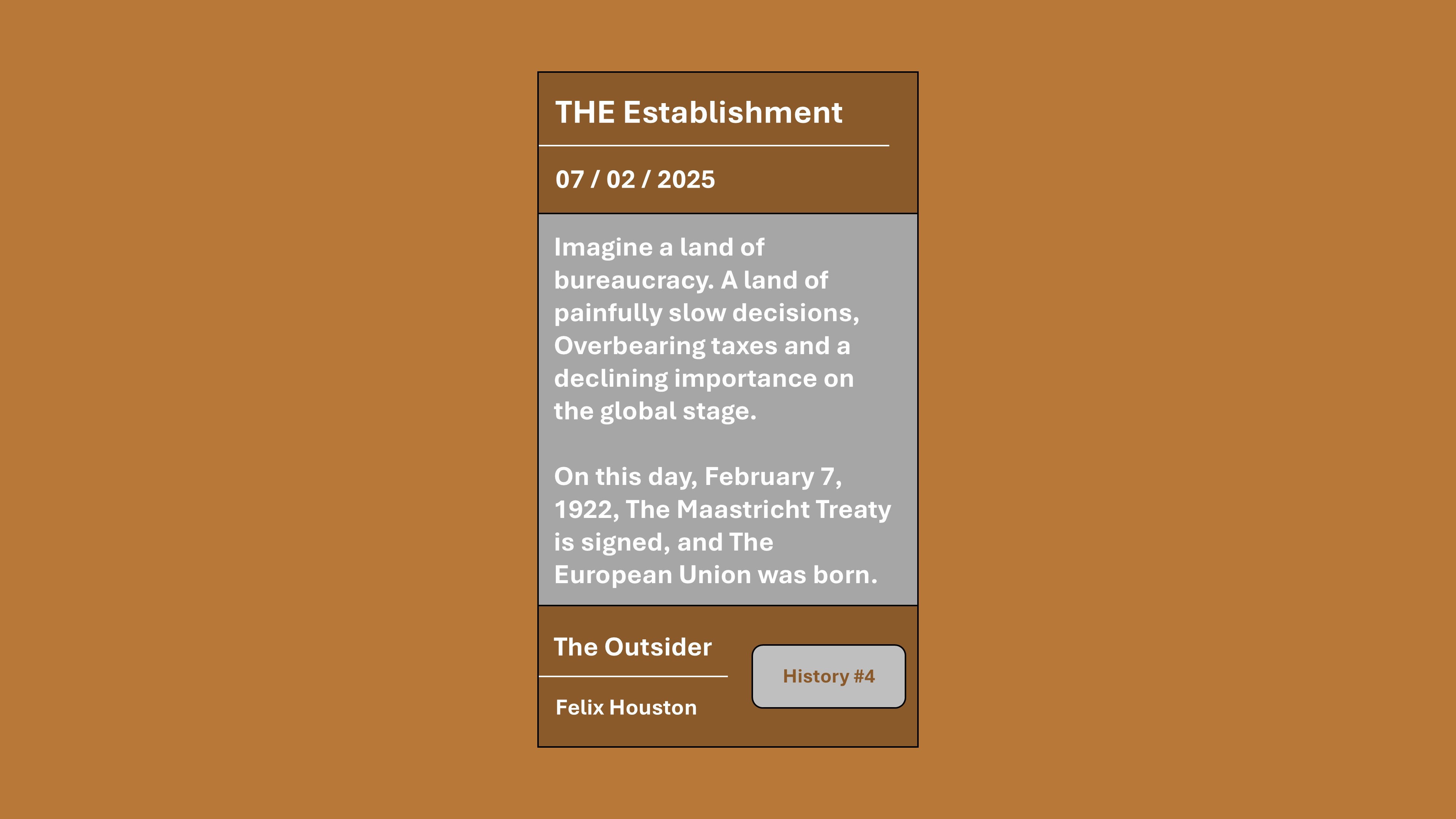
Imagine a land of bureaucracy. A land of painfully slow decisions,Overbearing taxes and a declining importance on the global stage.
On this day, February 7, 1922, The Maastricht Treaty is signed, and The European Union was born.
This is the reality that many critics associate with the European Union, an institution born on this day, February 7, 1992, with the signing of that treaty.
The treaty marked a historic moment, transforming the European Economic Community into a political and economic union. It introduced the euro, promised closer integration, and laid the foundation for a shared future among its member states. To its supporters, Maastricht was a triumph of diplomacy, ensuring peace, cooperation, and economic stability in a continent once ravaged by war. To its detractors, it was the beginning of an over-centralized, bureaucratic machine that diluted national sovereignty and imposed one-size-fits-all policies on vastly different nations.
Over the decades, the EU has become a symbol of both unity and inefficiency. It has navigated financial crises, political turbulence, and rising nationalist movements, all while expanding its influence across Europe. Yet its challenges are undeniable—an aging population, sluggish economic growth, and increasing discontent from those who feel Brussels is out of touch with everyday citizens.
Thirty-two years later, the question remains: Is the European Union a triumph of cooperation, or a self-imposed bureaucracy dragging Europe into irrelevance?